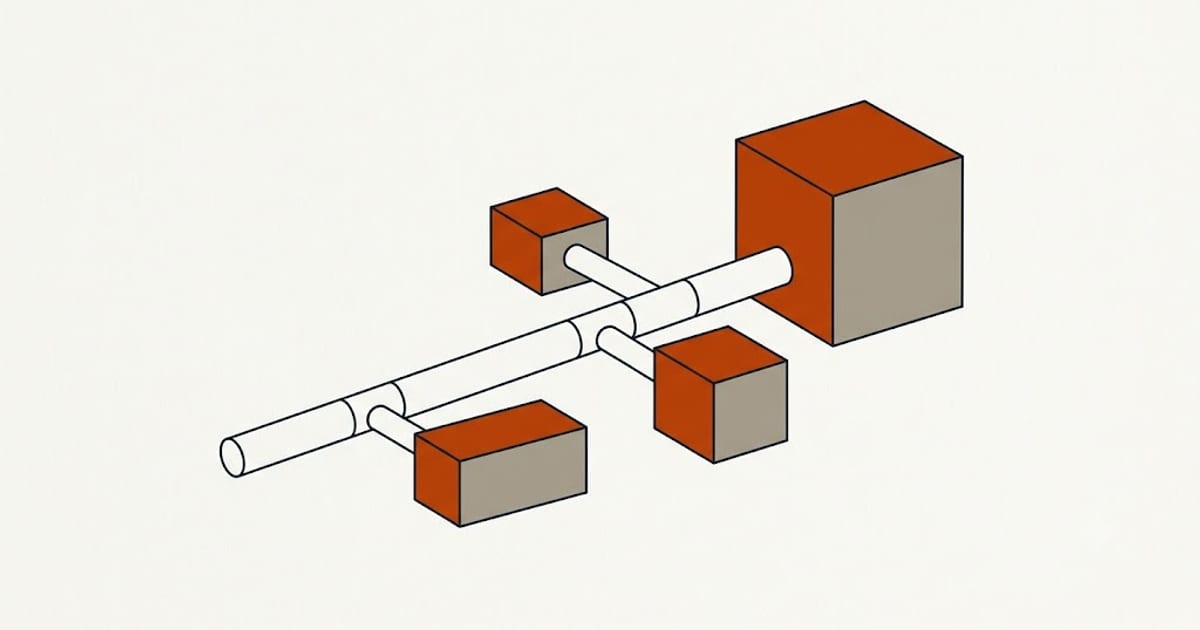
A standby generator on natural gas consumes more than any appliance in the house, and it does so on top of everything else.
The demand
Generator gas consumption is published in cubic feet per hour at 50% and 100% load, and for a mid-sized air-cooled unit at full load it is a large number relative to household appliances.
Compare that with a furnace, a water heater, a range and a dryer, and the generator alone can approach or exceed the combined demand of all of them.
What the meter can supply
Residential gas meters are rated in cubic feet per hour and are sized for the connected appliances.
An existing meter sized for a furnace, a water heater and a range is frequently too small once a generator is added, and the utility replaces it — sometimes along with the service line from the main.
That is a utility job with a utility lead time, and in some areas a charge. It is the item most often discovered after the generator has been ordered.
Pipe sizing
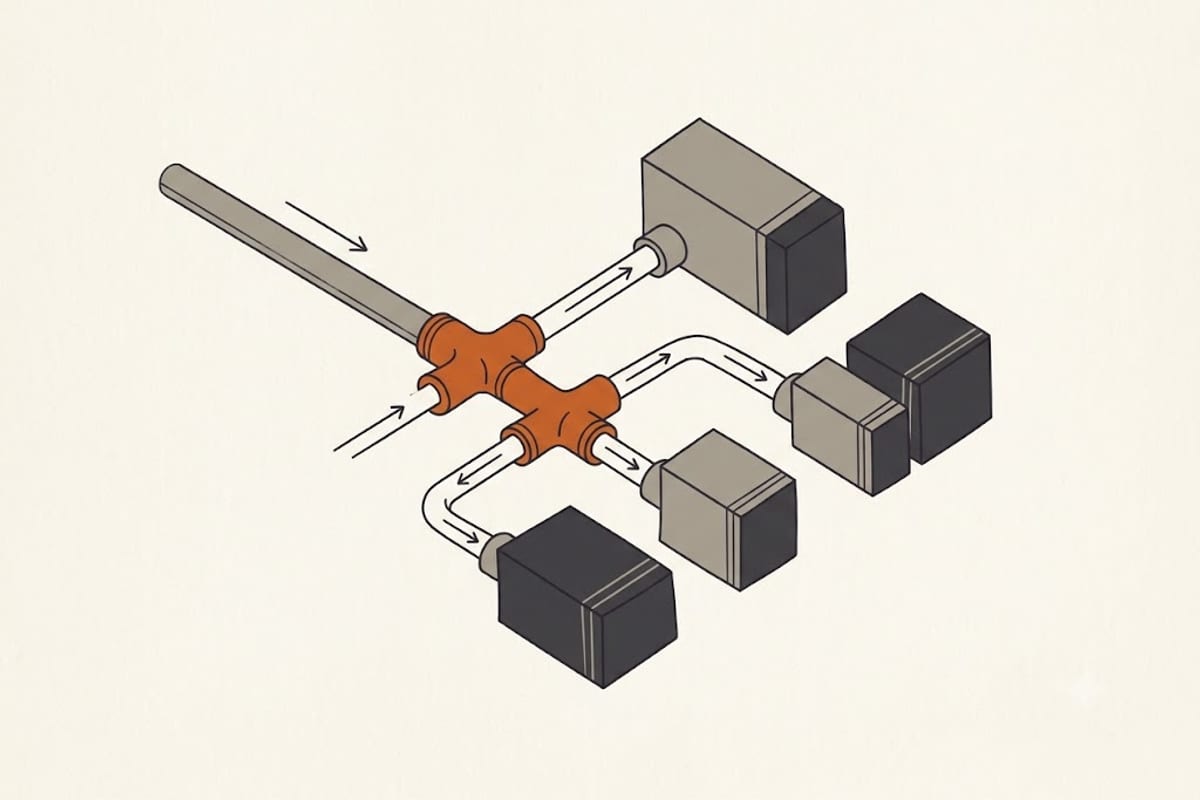
The pipe from the meter to the generator is sized on demand and length, using the tables in the fuel gas code and the allowable pressure drop.
Longer runs need larger pipe for the same demand. Fittings add equivalent length in the same way they do in a duct system.
Undersized piping shows up as a generator that runs fine until a large load starts, then stumbles or shuts down, because the pressure at the engine falls when it draws hard. It is diagnosed by measuring pressure at the generator under load, and it is a common fault on installations where the pipe was sized by eye.
The pressure question
Some installations use standard low-pressure supply throughout; others run a higher-pressure line to a regulator near the generator, which allows a smaller pipe for the same demand over a long distance.
The second is common on long runs and it needs the appropriate regulator and, usually, the utility's agreement.
Propane piping
The same principles, with different tables — propane carries more energy per cubic foot, so the volumes are smaller for the same output.
The additional consideration is vaporisation: the tank must be able to produce gas at the required rate, which depends on the wetted surface area and the temperature. A tank adequate in summer can be inadequate in severe cold at a low fill level.
What to establish before ordering the generator
The generator's demand at full load, in cubic feet per hour.
The existing meter's capacity and the total demand of the existing appliances, both of which the gas utility can provide.
Whether an upgrade is required, and what it costs and how long it takes.
The pipe run length from the meter to the proposed generator location.
Those four answers determine whether the installation is straightforward or whether it waits on the utility, and they are all obtainable before anything is bought.
The commissioning check
At startup, the installer should measure gas pressure at the generator with the engine running at load.
That single measurement confirms the meter and the piping actually supply what the engine needs, and it is the test that distinguishes an installation that works from one that works until the first real outage.
Material
Gas piping to a generator is commonly black iron, corrugated stainless steel tubing, or polyethylene where it is buried.
CSST is faster to install and it carries its own bonding requirement, sized larger than an ordinary bond, because it is vulnerable to arcing from lightning-induced currents. Where CSST is used and not bonded, that is an inspection finding and a genuine hazard.
Buried polyethylene requires a transition fitting where it comes above ground, and tracer wire so it can be located later.
The seismic and shutoff details
Some jurisdictions require an automatic seismic shutoff valve on the gas service, and a manual shutoff at the generator is required everywhere.
The manual valve has to be accessible — which in practice means not behind the generator, and not buried under whatever gets stored beside it within a year.