Standby generators run on natural gas, propane, or diesel. For a house it is almost always one of the first two, and the choice is mostly about supply rather than about the engine.
Natural gas
Advantages: unlimited run time, no tank, no deliveries, and no fuel to go stale.
Disadvantages: it depends on the gas utility, which can be interrupted — after an earthquake, or during work on the main. It also delivers slightly less power than propane in the same engine, typically a few percent.
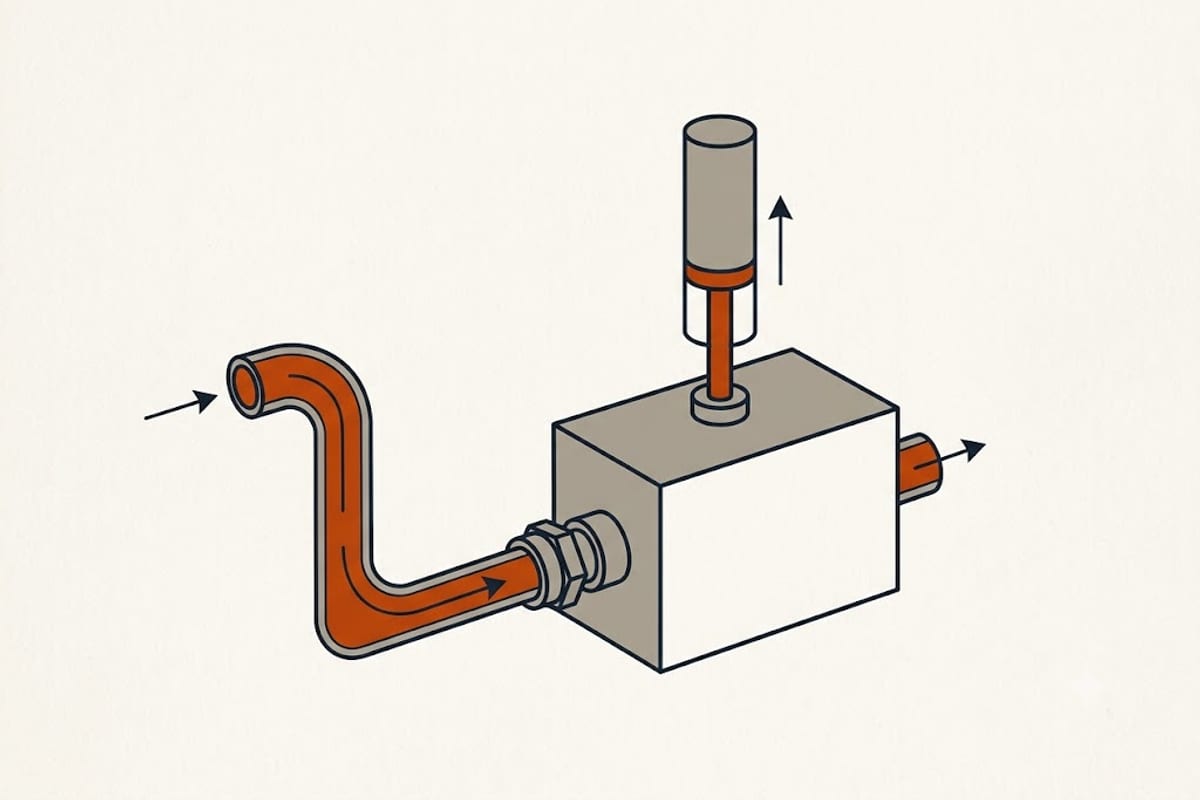
The requirement most often missed: the gas meter and the piping have to be able to supply the generator's demand on top of the house's existing appliances.
A standby generator is a large gas load, and an existing meter and service sized for a furnace, a water heater and a range frequently cannot carry it. The utility upgrades the meter and sometimes the service line, which is a lead time and occasionally a cost.
The pipe from the meter to the generator is sized for the demand and the distance, and undersized piping shows up as a generator that runs until a large load starts and then stumbles.
Propane
Advantages: stored on site and independent of any utility, slightly higher power output, and available where there is no gas service.
Disadvantages: finite run time, deliveries to arrange, and a tank to site.
Vaporisation is a real constraint in cold weather: propane must vaporise inside the tank to be delivered as gas, and the rate depends on the liquid surface area and the temperature. A tank low on fuel in severe cold may not vaporise fast enough for a generator's demand, which argues for a larger tank rather than a smaller one.
Run time on propane
hours = usable gallons ÷ gallons per hour at the expected load
Consumption depends on the generator size and the load. A mid-sized air-cooled unit at half load consumes on the order of two to three gallons an hour, and the manufacturer publishes the figure at 50% and 100% load.
A 500-gallon tank filled to 80% holds about 400 usable gallons, which at those rates gives several days of continuous running — and considerably longer in practice, because a generator rarely runs at half load continuously.
Size the tank for the outage you are planning for, not for the average one. A household preparing for a multi-day winter outage wants a 500 or 1,000 gallon tank, not a pair of barbecue cylinders.
Diesel
Used for large liquid-cooled units and rare at houses. It stores a great deal of energy per gallon and it degrades in storage, requiring treatment and periodic polishing or replacement.
Dual fuel
Many air-cooled generators are field-convertible between natural gas and propane, with a jet or a regulator change.
That is worth knowing where gas service is expected in future, or where propane is the primary and a gas connection may arrive.
What to establish before ordering
On natural gas: whether the meter and service can supply the demand, and what the utility charges to upgrade them.
On propane: the tank size, who owns it, and what the delivery arrangement is during an area-wide outage when every household is calling.
That last point is frequently overlooked. In a widespread winter event, propane deliveries are slow, and a tank sized for the average week is the wrong tank.
Derating for altitude and temperature
Engine output falls with altitude and with high ambient temperature, and manufacturers publish the derating.
At elevation the effect is significant — several percent per thousand feet — and a generator sized at sea level figures for a mountain house will be short when it matters. It belongs in the sizing calculation rather than being discovered during the first outage.