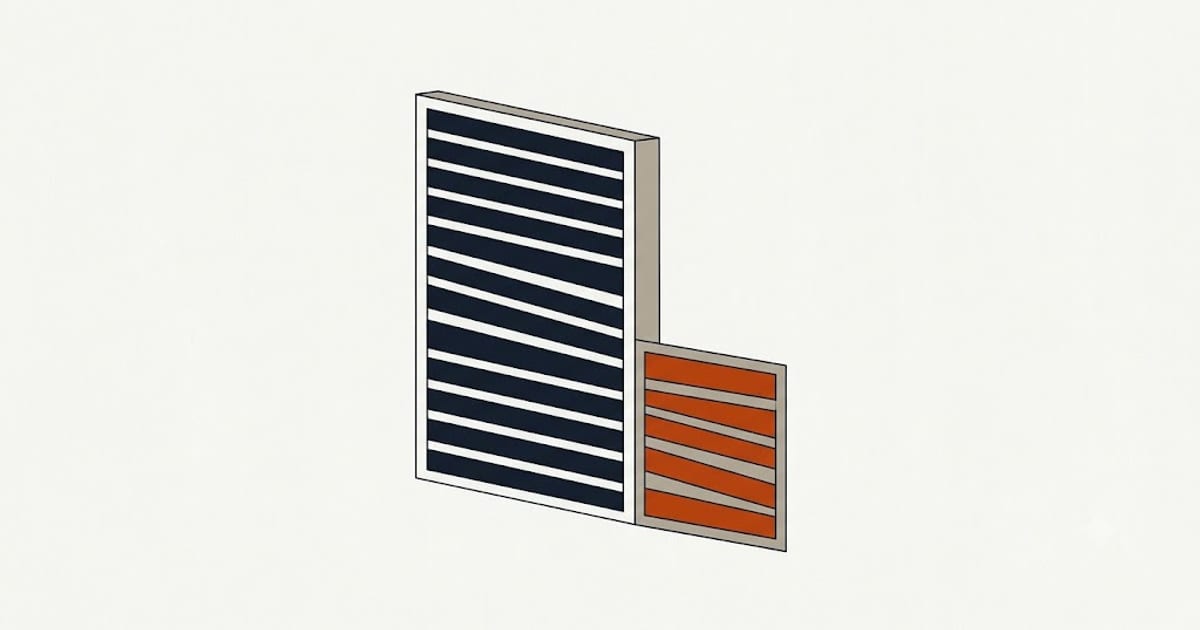
An essential circuits installation puts chosen circuits into a subpanel that the generator supplies. Everything else stays dark.
The universal list
Heating. The furnace or air handler — the blower, the controls and the ignition. A gas furnace draws surprisingly little and it is the difference between a habitable house and frozen pipes.
Refrigerator and freezer. A chest freezer of food is worth more than the generator's fuel.
Sump pump, where there is one. An outage during a storm is exactly when it is needed.
Well pump, where the water supply depends on one. No pump means no water and no toilets.
Some lighting, in the kitchen, the bathrooms and the circulation spaces.
A few receptacles for phone charging, the internet equipment and a lamp.
The garage door opener, in a house where the only vehicle exit is a powered door.
The house-specific additions
Medical equipment — oxygen concentrators, CPAP machines, refrigerated medication. Where any of these exists it goes first on the list and it is never shed.
Air conditioning, in a hot climate where a summer outage is a health question rather than a comfort one, particularly for elderly occupants.
A septic pump, in a system that has one. Without it, the household stops using water within a day.
Water heating, which is a comfort item rather than an essential and which is a good shedding candidate if included.
Home office equipment, for a household whose income depends on it.
What is usually left out
Electric range and oven — cooking can be done another way for a few days.
Electric dryer.
Pool and spa equipment.
Most lighting.
Air conditioning, in a mild climate.
Second refrigerators, workshops, and outbuildings.
The circuits people forget
The internet equipment, which is often on a receptacle nobody thought about, and which is how the household finds out when power is coming back.
The boiler or furnace's own circuit, which is sometimes fed from a switch on a different circuit than expected.
The septic or sewage ejector pump, which is out of sight and out of mind until it is not.
A single receptacle in the bathroom, which matters more than it sounds after two days.
Whole house versus essential
An essential circuit installation is cheaper — smaller generator, smaller transfer switch — and it requires deciding in advance and living with the decision.
A managed whole-house installation costs more and behaves like normal life. For most households the second is what they want if the budget reaches it, and shedding is what makes the generator size reasonable.
An essential-circuits installation can also be an interim step: the transfer switch and generator sized for it now, with the option to expand later, provided the equipment is chosen with that in mind.
Making the list
Walk the house with the panel directory and mark each circuit as essential, useful or unnecessary.
Then check the "useful" pile against the cost of the next generator size, because the difference between a modest list and a generous one is usually one step in generator capacity — and that step is a large fraction of the total project.
The wiring work behind it
Moving a circuit into a backup subpanel means physically relocating that circuit's conductors, which requires enough slack in the cable to reach the new panel.
Where there is not, the circuit is extended in a junction box — ordinary work, and it adds time. On a panel where every cable was cut to length, the number of circuits that can be moved without extension is a real constraint on the list.
It is worth asking the installer which circuits are easy to move and which are not, because a circuit low on the "useful" list that happens to be easy may be worth including, and one high on the list that is difficult changes the price.
Revisiting it later
Households discover after their first outage which circuits they actually missed.
Adding one or two to the subpanel afterwards is a short visit, provided the subpanel has spare positions and the generator has headroom. Leaving both is cheap insurance at installation.