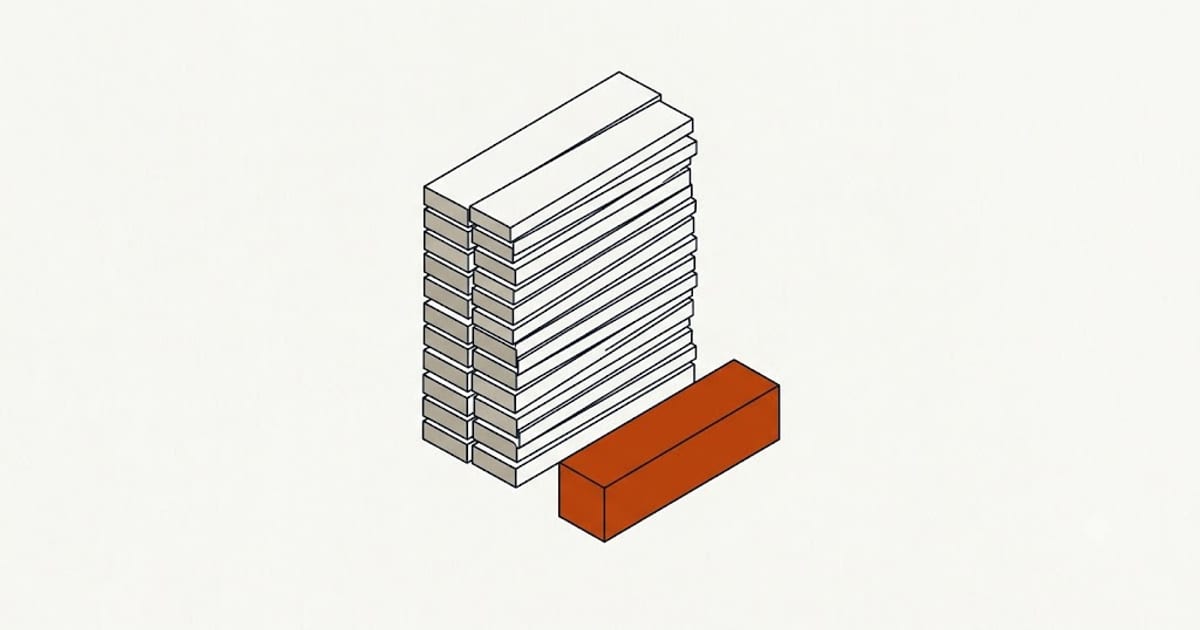
Residential standby generators run from roughly 7.5 kW to 26 kW air-cooled, with liquid-cooled units above that. Which one a house needs is a question about simultaneity.
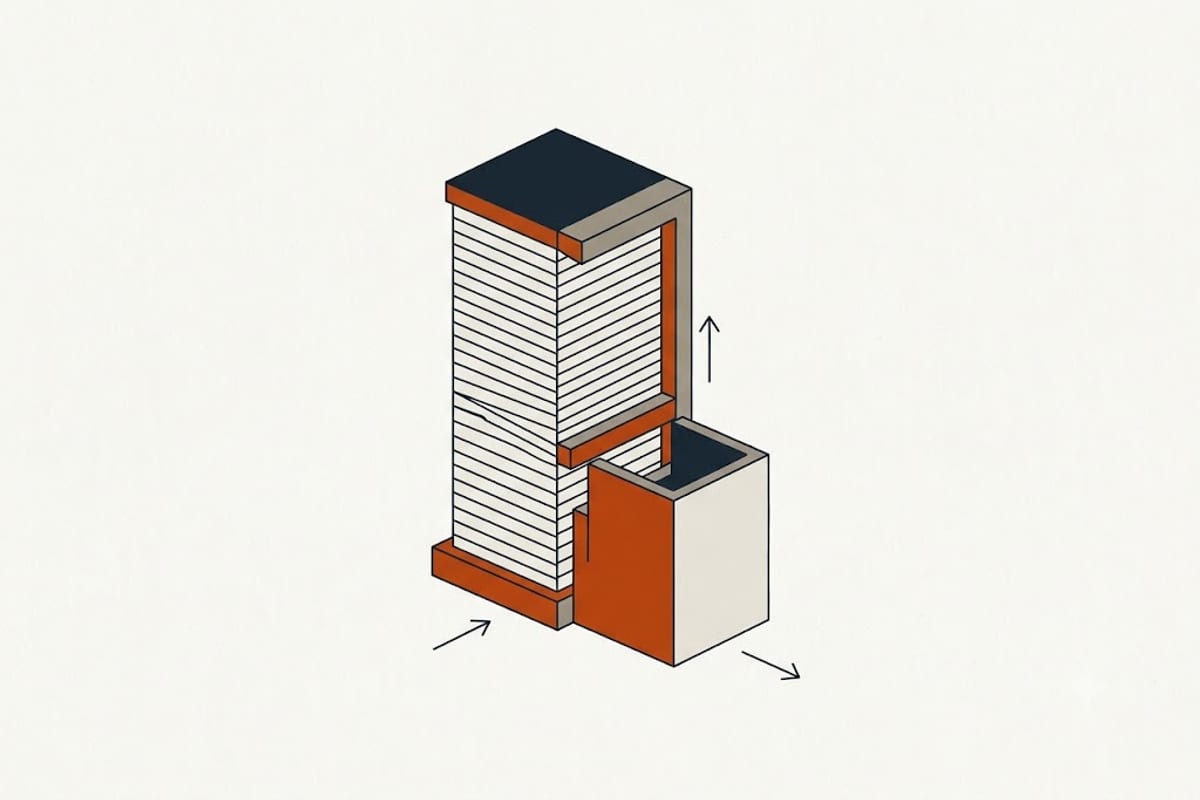
Two approaches
Essential circuits. A subpanel containing the circuits that matter — furnace or air handler, refrigerator, well pump, sump pump, some lighting and receptacles, and the internet equipment. Sized to those loads, this is usually a small generator.
Whole house. The generator supplies the entire service through a transfer switch. Simpler to live with, and it either needs a large generator or a load management system.
Managed whole house is the arrangement most installations now use: a moderate generator plus load shedding, so the house behaves as though everything is available while the generator never sees everything at once.
Building the number
List what must run simultaneously, with two figures for each:
Running watts, the steady draw.
Starting watts, the surge when a motor starts, which for an induction motor can be several times running.
Sum the running watts of everything, then add the largest single starting surge. That is the peak the generator must survive.
Motors are what dominate this: well pumps, sump pumps, air conditioning compressors, refrigerator compressors.
Typical running loads
| Load | Approx. running |
|---|---|
| Refrigerator | 150–800 W |
| Furnace blower | 500–900 W |
| Well pump, 1/2 hp | 900–1,200 W |
| Sump pump | 800–1,050 W |
| Lighting, whole house LED | 200–500 W |
| Microwave | 1,000–1,500 W |
| Electric water heater | 4,500 W |
| Central AC, 3 ton | 3,500–4,000 W |
| Electric range | 8,000–12,000 W |
Air conditioning and electric resistance loads are what push a generator from small to large, and they are also the loads most amenable to shedding.
Load shedding
A shedding module drops a chosen large load — usually air conditioning or a water heater — when the generator approaches its limit, and restores it afterwards.
Two air conditioners on separate sheds can be alternated. A water heater can be shed entirely with almost no noticeable effect, since a tank holds hot water for hours.
This is what allows a 20 kW generator to run a house whose calculated load is far higher, and it is much cheaper than the next generator size.
Soft starters
A soft start device on an air conditioning compressor reduces its starting surge substantially.
That frequently allows a smaller generator to run a compressor it otherwise could not, and it costs a fraction of the generator size difference. It is one of the highest-value additions in the whole system.
Air-cooled and liquid-cooled
Air-cooled, up to around 26 kW, is what almost all houses use. Cheaper, smaller, and adequate for most.
Liquid-cooled, above that, is quieter, longer-lived and much more expensive, and it belongs on large houses with genuinely large simultaneous loads.
What not to do
Do not size from the service rating. A 200 amp service is a capacity, not a load, and sizing a generator to it means buying two or three times what the house needs.
Do not size from square footage. It correlates with nothing that matters here.
Do not undersize and rely on discipline. A generator overloaded at 2am shuts down, and the household is asleep.
The document to ask for
A load list showing each circuit, its running watts and its starting watts, and the shedding arrangement.
That is what determines the generator model, and a quote arriving without it is a quote for a product the dealer stocks.